
Blog
22
Sep

Annual Labs

Posted by RMAP Nurse

Q: What are the labs required to have drawn annually post weight loss surgery?

  1. Comprehensive Metabolic Panel
  2. Lipid Profile
  3. CBC with diff
  4. Vitamin B12 level
  5. Thiamine (Vitamin B1) level
  6. Folate
  7. Hemoglobin A1c

What are the labs required to have drawn annually for Duodenal Switch patients?

            All of the above labs, PLUS….

  1. Vitamin A level
  2. Vitamin D level
  3. Protime
10
Sep

September Support Group Recap

Posted by RMAP Nurse

The annual Walk from Obesity was held Saturday, August 29th, 2009 at West Jordan’s Veteran Memorial Park! The focus was on childhood obesity awareness, research, and prevention. We had about 60 participants, including several members from RMAP: Bette (Receptionist), Paula (Patient Advocate), Alicia (Dietitian), and Dr. McKinlay (Surgeon, duh!).

Best of all, we had many patients attend. A BIG shout out to those who gave up their Saturday morning to participate in this important event! We thank you!

Alicia had the following to say about the event,

“It was fun! Lots of kids and kid activity. I have a few ideas for next year to help us be more interactive with the population that will be there such as nutrition and activity games.”

Of course there are always things we can improve upon. The committee will be meeting at the end of September to discuss the Walk and to start planning for next year! We hope to make this an event that people will put on their calendar as something to look forward to! 

All proceeds from the event will go to the American Society of Metabolic and Bariatric Surgery (ASMBS), as well as the Obesity Action Coalition (OAC) for obesity research.

Come on ya’ll, let’s not just talk the walk, but walk the walk!

10
Sep

So Many Pills, So Little Time!

Posted by RMAP Nurse

Q. What vitamins and minerals should we take pre- and post-operatively?

A. 1) Multivitamin: One/day, we don’t recommend a certain brand, but do know that Centrum is a popular one amongst our patients. For about two weeks after surgery, this pill should be chewable or liquid. Taking children’s vitamins is okay, as long as you take two pills (or the recommended adult dose as indicated on the bottle). Using a gummy bear multivitamin is okay, but do be aware of extra added sugar. Take it at a time that can become habit for you.

2) Vitamin B-12: 500-1,000 mcg/day. Take sublingually (a small pill that is placed under the tongue and absorbed directly into the bloodstream) daily or by intra-muscular injections, monthly. Take at a time that can become habit for you.

 3) Calcium: 1,200mg (pre-menopausal) — 1,500mg (post-menopausal) daily, but it is best to take in smaller doses 3x/day. Hence, 400-500mg 3x/day (at each meal). Do not take your calcium supplement until you are drinking at least 64 ounces of water. For the first two weeks after surgery, this pill will need to be chewable. Calcium Chews are okay to use, but be aware of any extra added sugar.

4)
Iron: This may be prescribed by your surgeon at a later date, if needed. Usually only needed by menstruating women. Take at a time that can become habit for you, but with one stipulation: Iron must be taken at least 2 hours apart from the calcium supplement. They compete for absorption sites.

03
Sep

Constipation 101

Posted by RMAP Nurse

Q. What should I do to treat constipation?

A. A normal bowel movement is defined as once every three hours to once every three days. If you are outside this time frame, and are not experiencing severe abdominal pain, here are your options:

1) Drink plenty of water; at least 64 ounces, preferably more.

2) Physical Activity: Get up and move! Exercise! This stimulates peristalsis (movement of the GI tract). So get that heart rate up!

3) Use an OTC (over the counter) laxative, such as Colace or Milk of Magnesia. This should not be used regularly, but in times of “desperate need.”

4) Occasionally add a little bit of simple sugar to your diet. “A little bit” is    defined as the size of a strawberry, twice a week. Simple sugars can include     fruit or applesauce.

21
Aug

Our Drinking Straw Credo

Posted by RMAP Nurse

Q: What is the recommendation for the use of drinking straws? 

A: The use of drinking straws can be highly debated. Some say: Avoid them. Why? It is easy to inhale too much air when using a straw for consuming water, and can consequentially cause gas. Others say: Use them. Why? Patients have said they can drink a significantly greater amount during the day with the use of a straw.
 
A hot topic on our online forums has been about Camelbak water bottles. The apparatus utilizes a pressurized straw system, eliminating air from being inhaled while drinking.  Many patients rave about the Camelbak, claiming that despite past problems of drinking enough water, when using a Camelbak they now exceed 64 ounces a day.

17
Aug

August Support Group Recap

Posted by RMAP Nurse

From the Orem Support Group, BYU football player Parker Mangum focused on finding your motivation for exercise, deemed as your “why” for being physically active.

We so often view exercise as something painful, difficult, sweaty, and energy-depleting, when, in fact, it can be quite the opposite. When you find your “why,” exercise can become meaningful, enjoyable, and energy-building. Here are some of the following “why’s” of fellow RMAP patients: 

  • Be healthy enough to play with my kids
  • Live a healthy life to see my children grow up
  • Lower my blood pressure, pulse, and cholesterol
  • Lose more weight
  • Increase muscle and muscle tone
  • Be a good example to my children
  • Help clear my mind and focus on eating healthy 

Despite common stigmas, exercise does not have to be an arduous ordeal: We feel we must always dress in the appropriate gear, drive to the gym, run myself ragged on the treadmill, and drive back home. Exercise can be simple, quick, and just as beneficial.

Try this: Finish your dinner, stay in the same clothes, grab your children or your dog, and walk for 30 minutes in your neighborhood. When you come back home, the last thing on your mind is food, and it will promote a better night’s sleep.

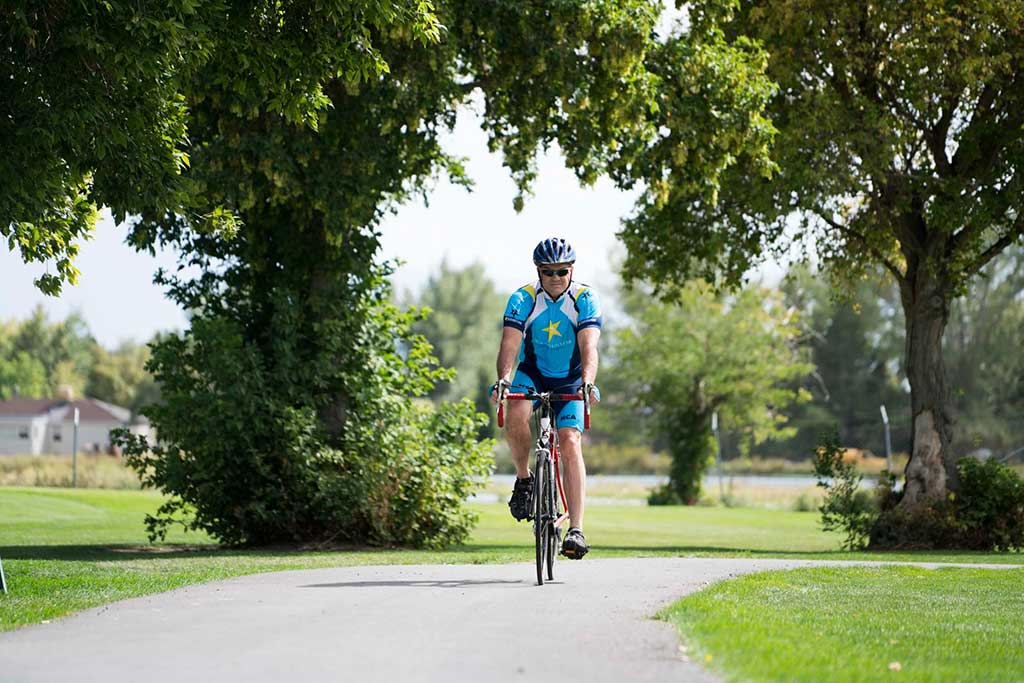
If walking is not your Modus Operandi, find an activity that works for you: swimming, or even walking in a pool, running, water aerobics, join a city league softball team, rollerblading, riding a bike, or using an arm “bike” machine. After you have exercised, do you ever regret it?

Brian Sabey, a Physical Therapist, from the Salt Lake Orthopedic Clinic at Support Group in Salt Lake City, mentioned that if you do even 20% of the ideal amount of exercise, you still achieve 80% of the benefits. That is a pretty good rate of return!

Parallel to weight loss surgery, exercise is a lifestyle change. It is not a crash diet, or a temporary fix. Find a routine that is enjoyable and can be maintained for life. Strive to find your motivation, your “why” for exercise. If you struggle with that task, fake it ‘til you make it.

Enjoy this journey.

14
Aug

Welcome!

Posted by RMAP Nurse

Thank you for visiting Rocky Mountain Associated Physicians’ Blog! Here you can find answers to Frequently Asked Questions (FAQs), and to hear recaps of monthly support group meetings. Our hope is to make the blog another opportunity for you to gain more education, find motivation to continue on with your weight loss journey, and to connect with our office.

Check back often for updates!

©Copyright 2005-2012 Rocky Mountain Associated Physicians. | Privacy Policy | Terms of Use